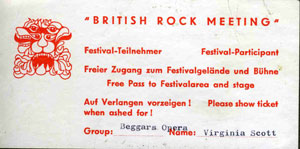
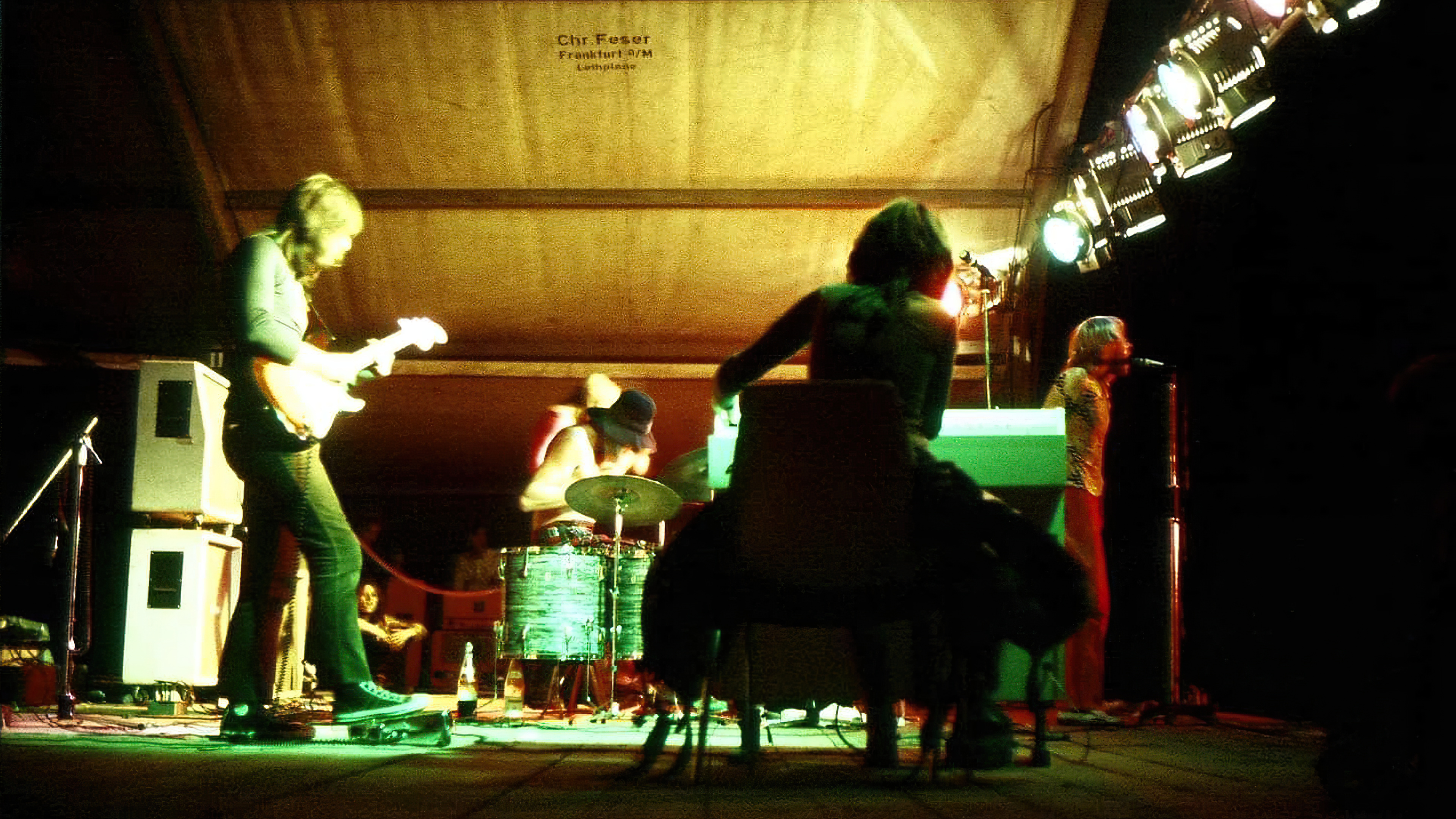
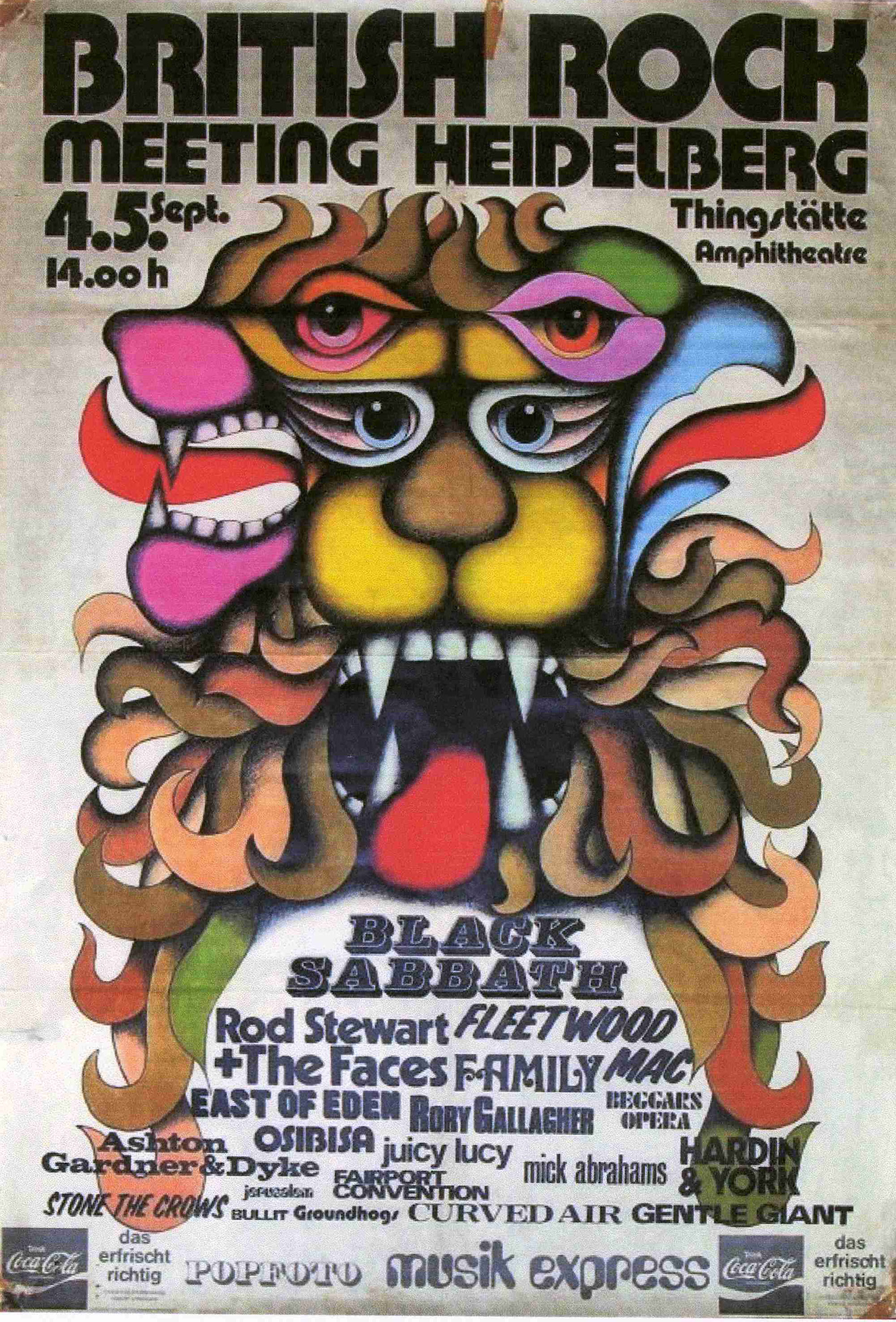
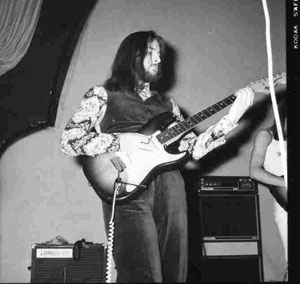
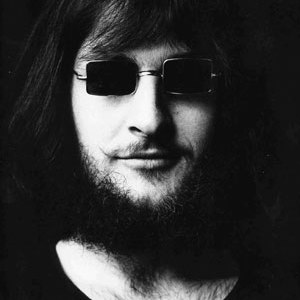
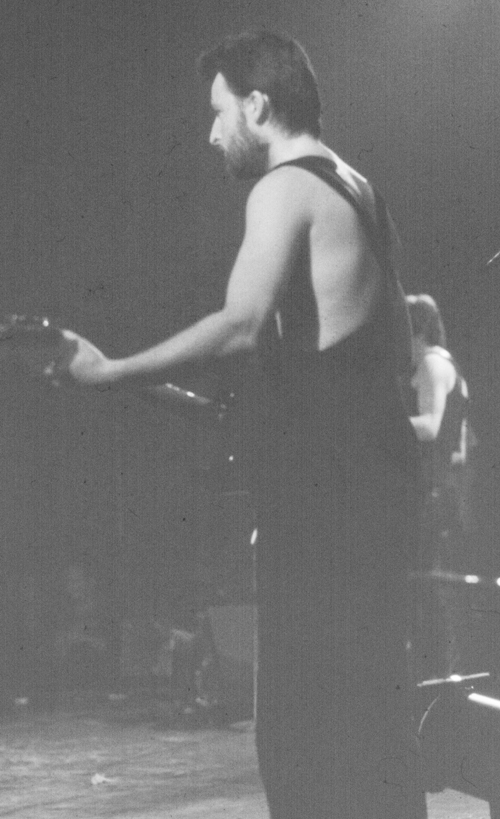
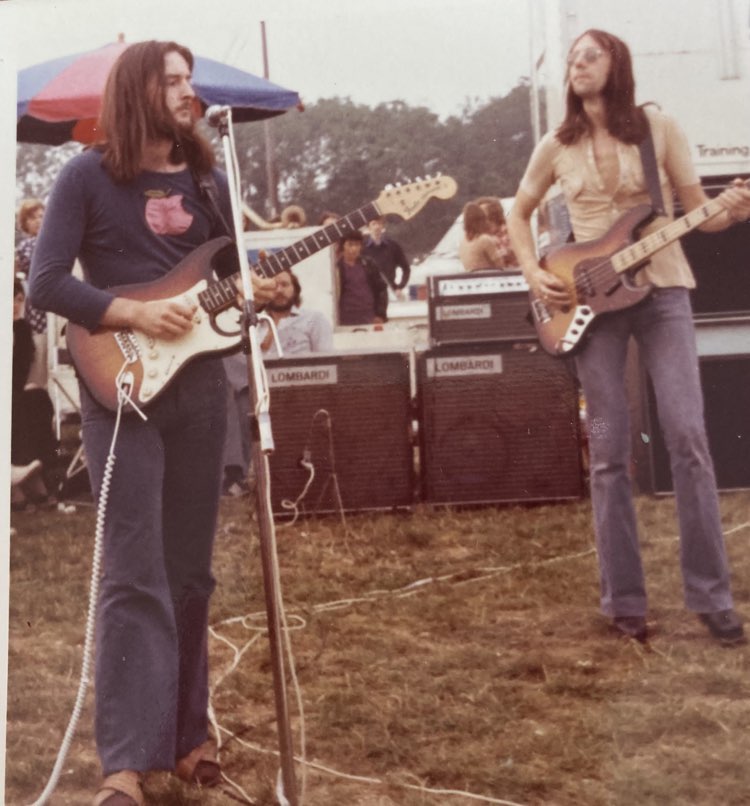
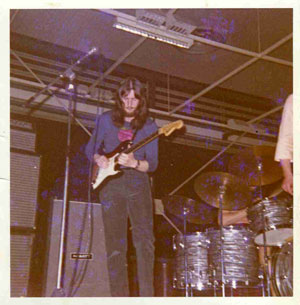
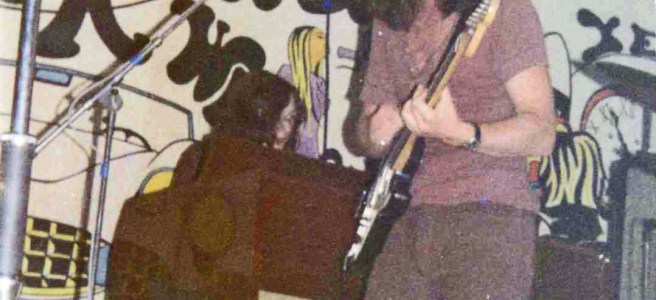
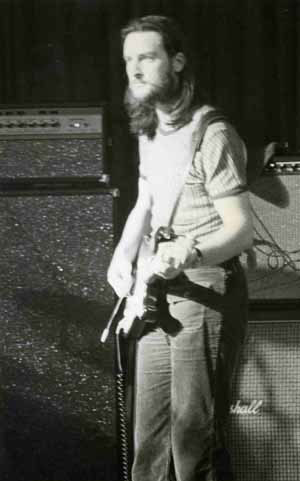
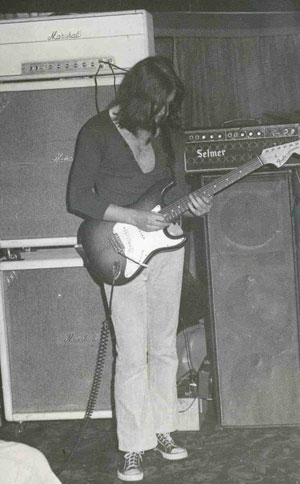
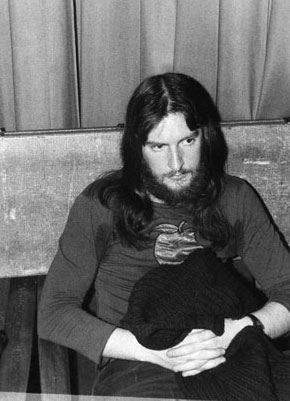
Beggars Opera at the Great British Rock Meeting at Speyer 1971. Ricky Gardiner – guitar, Virginia Scott – Mellotron 400, Martin Griffiths -vox and Ray Wilson drums. Not visible are Alan Park- organ and Gordon Sellar – bass. The is a very rare and atmospheric shot taken at dusk by Marcel Huckel. It was truly a memorable day.
Here is a set of answers to questions sent to Ricky Gardiner re the recording of the David Bowie Low album by French journalist Jerome Solingy. Sadly I do not have the questions but I thought there are a few interesting points in the answers for those who are interested.
1/. Tony was involved (although I have no evidence that he, alone, was responsible for my appearance on the ‘LOW’ album).
I knew nothing of David’s music at the time so I was neither a big or small fan of his music.
2/. My memories of the ‘LOW’ album mostly involve the other musicians although I do remember David doing Marc Bolan impressions and his, apparently spontaneous, rendering of the vocal to ‘SOUND AND VISION’. It was most impressive!
For me, the recording was completely conventional…It was in the mixing that anything else happened.
I found David easy to work with and yes I enjoyed being part of the project.
3/. Yes. I then toured with Iggy and David. I understand that memory is a construct. However, I remember the two little boys (for such they were) running up the hotel corridor and knocking on my door and asking if my wife, Virginia, was coming out to play? I do not think they were joking.
I remember Hunt and myself laying back on a track so much that it, imperceptibly, slowed down. I do not remember which track it was … or which gig.
4/. I seem to remember that HANSA could be rendered into different spaces by the judicious arrangement of the curtains. It was/is a large space.
Berlin, was very strange then. It had been the capitol of Germany but was now an island of, so called, plenty surrounded by the grey decay of East Germany with colourless posters advertising holidays in Poland…very strange!
Writing with the two boys was easy and plain sailing. David had a small upright piano and I had my unplugged strat and Iggy had a recording device that was beyond description. (I have since used cassette devices to great advantage).
Working with the boys I took as much space as I needed … I am not greedy.
5/. …
6/. My favourite David album is OUTSIDE.
RICKY
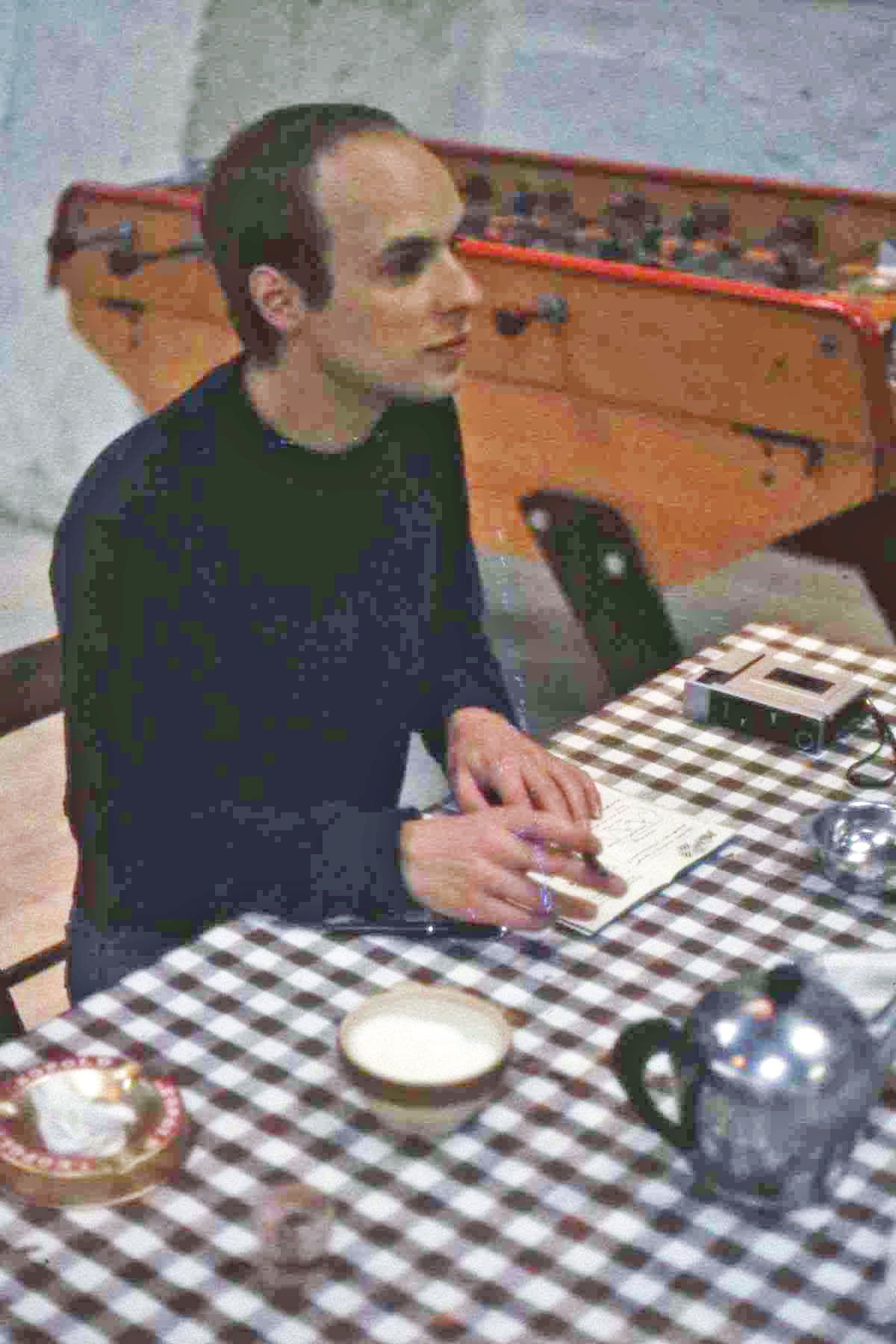
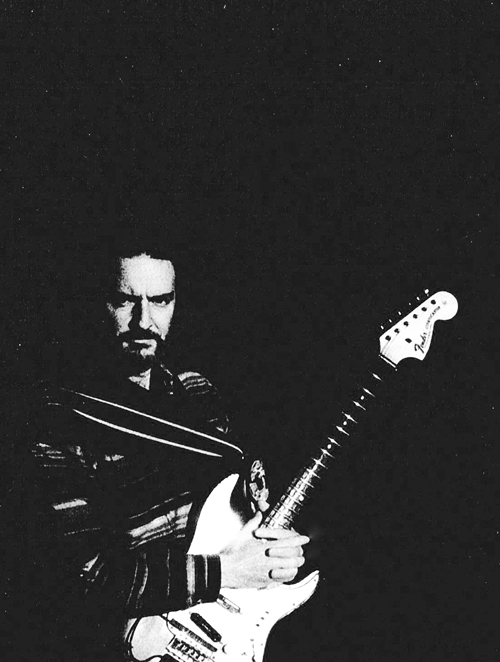
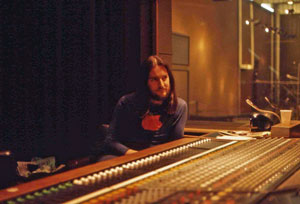
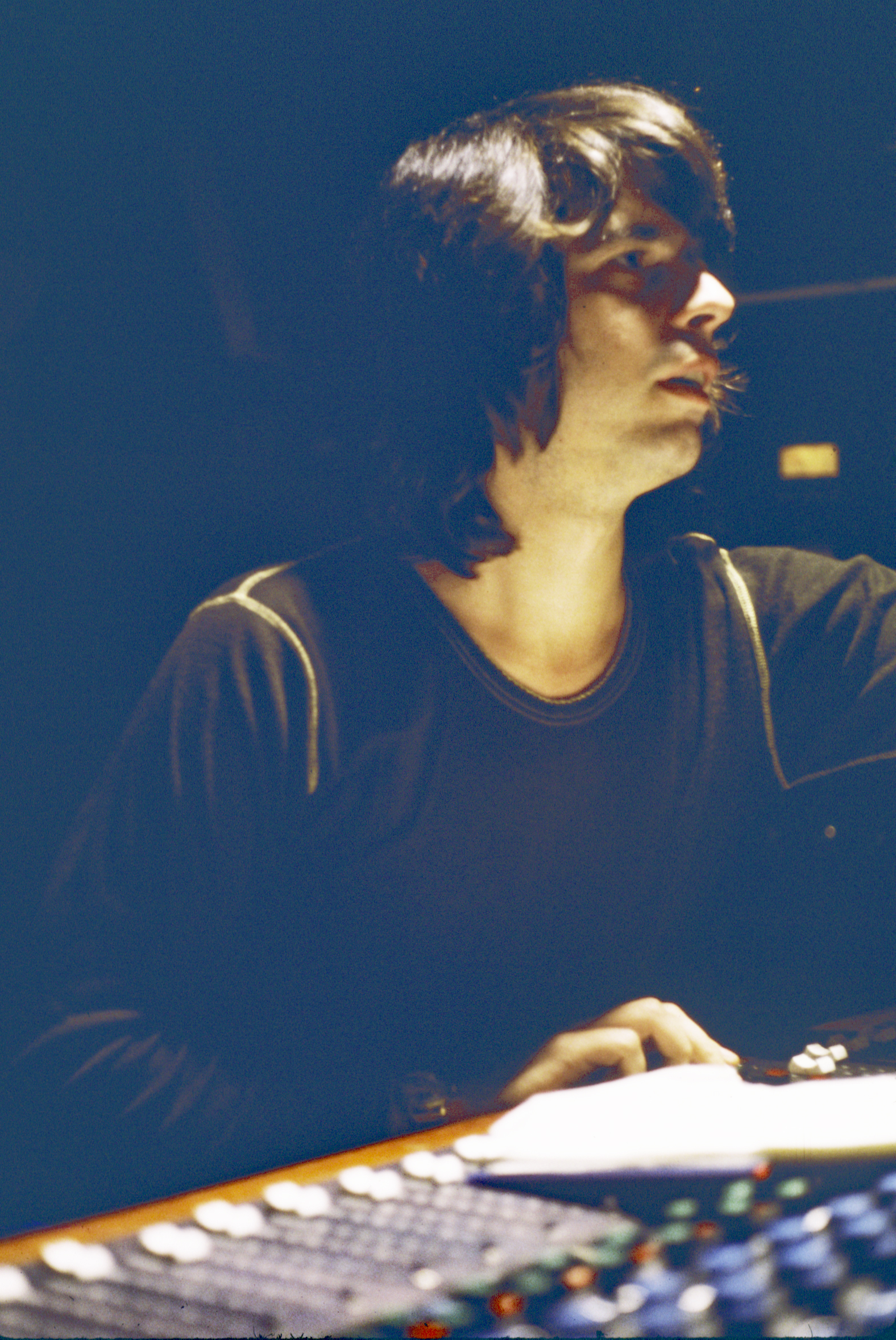
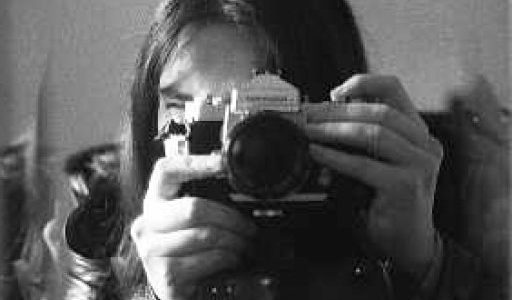
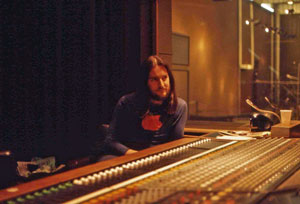
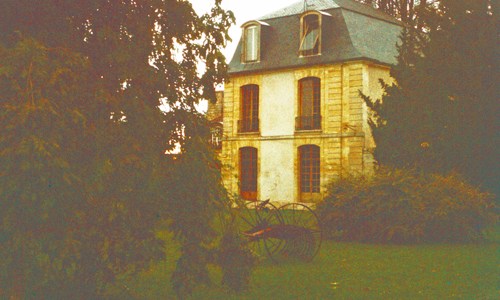
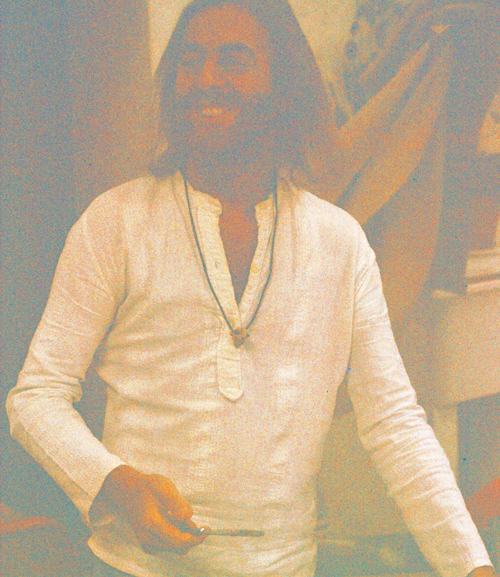
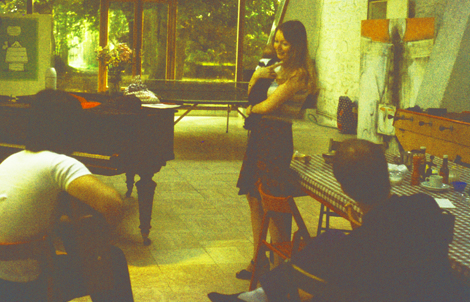
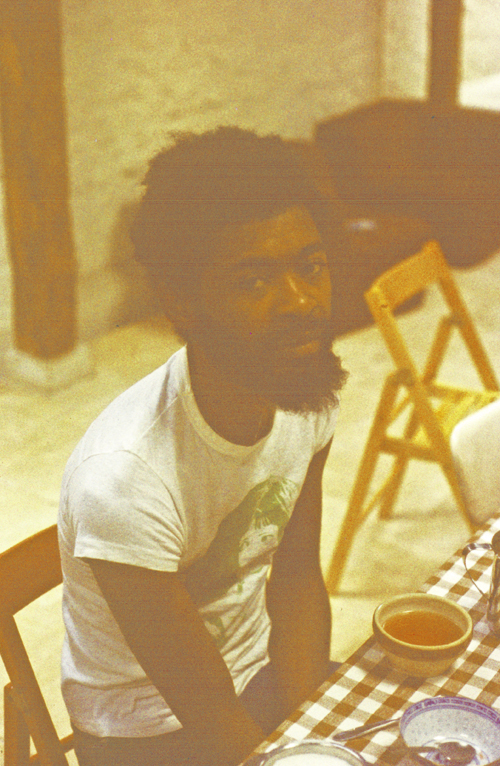
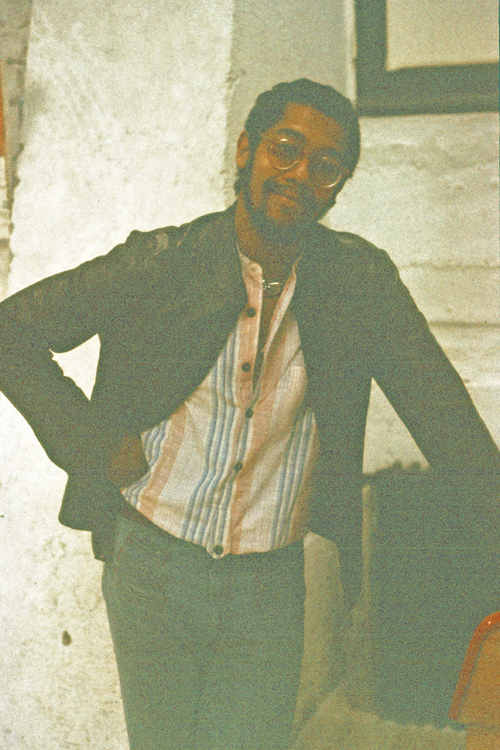
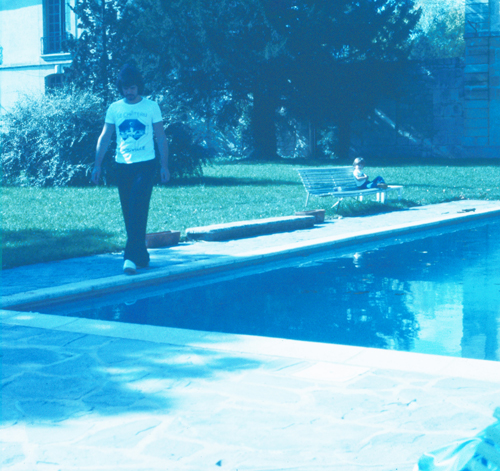
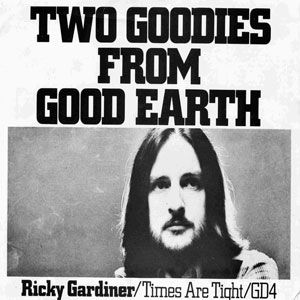
The studio desk Chateau D’HerouvilleRicky Gardiner and Tony Sales Idiot Tour 1977Ricky Gardiner and Tony SalesRicky Gardiner Phonogram Studios
Photo: Tony Visconit at Good Earth studio by Ricky Gardiner
This Ricky Gardiner interview was requested by Dave Simpson journalist via e mail and is reproduced here verbatim.
On 23 January 2013 at 19:59 Dave Simpson <simpo6@mac.com> wrote:
Hi Ricky… questions as promised. I’ve realised that you’ve played on two albums that would feature in my Top 10 of all time (Low and Lust for Life) and toured another (The Idiot ), which is going it some!! So here goes…
OK Dave
1) Didn’t you get the call to work with Bowie through working with Tony Visconti? Was Bowie familiar with your work with Beggars Opera?
My appointment was undoubtedly reinforced by that connection. Interestingly at that time Virginia and I were working with Tony on the Diana Demon/ Beggars Opera project at the original Good Earth/ Melrose Terrace/ Shepherd’s Bush studio in 1975/6. David recorded vocals there too. I think that would have been David’s Station to Station album. In fact we were invited to his show at Wembley around that time but did not actually meet him then. Mary Hopkin too and Tony’s solo album were recorded there. It was a very intimate studio, with all the new gear of the moment. I think that was when Tony got the Eventide Harmoniser that he used a lot with David for drums.I mean we were all just part of what was happening there at the time.
As to David knowing about Beggars Opera? David advised that he was aware of Beggars Opera and I think there would have been more than one reason for this: firstly, Beggars Opera had been very big in Germany (our Time Machine track was ubiquitously played there in all night club venues, and still is, having been what was known there as a ‘superhit’ and the introduction if I may say so, makes it’s presence felt with some fairly unusual guitar effects, which may have caught David’s ear and , secondly Beggars Opera were supported on their many tours of Germany in the early 70’s by the latest experimental krautrockers like Kraftwerk etc, who had attracted Tony, Mary and David’s attention.
Interestingly later on Vertigo they released a split single of Beggars Opera Classical Gas and Autobahn !2) One of David’s current band, who has worked with some of the world’s biggest stars, told me that when he first met DB it was the only time he had ever been totally starstruck, but that Bowie instantly put him at ease.
2) Where did you first meet David? How was it for you?
I first met David on the LOW sessions at the Chateau D’Herouville outside Paris in1976. It was in the control room, which was crowded with Americans plus David, and Corrine Schwab (Coco) David’s PA introduced me to everybody which was very pleasant.
3) Did you have any preconceptions about what working with David Bowie would be like? (whether from the Ziggy/ Aladdin or Young Americans eras etc?
No. I was not really aware of David’s work in detail as Beggars were so busy touring Germany at the time. We only really heard the bands we played with like Floyd, progressive Rockers and Krautrock bands of the day.
4) Did you discuss much about how Low was going to sound? Or was the creative process quite spontaneous?
My recollection is that it was all quite spontaneous, certainly with respect to side one. The two sides of that album must be considered separately in my opinion. But the Always Crashing in the Same Car track, was the first solo I did on arrival. David hummed the first few notes and I took it form there. When I came back into the control room both David and Eno seemed to be quite happy. The song is about David crashing his car in the hotel garage.
5) Everyone I have spoken to so far has spoken of how David can talk about virtually any subject in remarkable depth. Do you remember many such conversations? You spent a lot of time in the studio and on tour with him. Did you get to know him well?
I regard David as being well read in the areas that interest him. At the Hauptstrasse apartment, where I did some initial rehearsal with David and Iggy, he had an extremely well stocked library on many subjects including astrology, which we were all interested in at that time. We talked of UFO’s, oriental music and psychicphenomenon.
6) Wasn’t the first studio based in a haunted French chateau? What’s David like to work with in the studio compared to other artists you’ve worked with?
The studio in question was the Chateau D’Herouville. It was situated in the countryside among the beautiful Golden Delicious apple orchards. I recall cycling there with Tony in the glorious sunshine. Brian Eno joined us towards the latter part of recoding the LOW album and his bedroom in the Chateau was reputed to have been occupied at one time by Chopin who had consumption. Brian developed a cough while occupying that room.
Working with David at a musical level was collaborative and mutual. While he was open to ideas, he knew what he liked and did not like. Being decisive in this matter is important.
7) David once said that he had arrived in France trying to escape the “foreboding of Los Angeles, on the brink of drug-induced calamity, at the end of my tether physically and emotionally, and had serious doubts about my sanity.” And that Europe offered spiritual and physical escape/detox. Did he ever express these sort of sentiments to (any of) you at the time?
I certainly concur that Los Angeles is a strange place. The Chateau had the potential to bring tranquility perhaps due to its location. On the other hand, Berlin in those days, was a colourful island surrounded by a dark oppressive colourless hinterland. I am not convinced that tranquility was to be found there. You see wartime Berlin was still very visible. In the environs of David’s Hauptstrasse apartment, one could still see the bullet holes in the walls of buildings and David took us to a place where they ran the Nazi propaganda films 24/7, which was a very sobering experience. We rehearsed at the old UFA film studios with Iggy, where these films would have been made and one could see the guards pacing the wall/ towers at Hansa studios. The atmosphere was laden with the resonance of WW2: the war in which our parents were heroes. I think any sentiments were silently confirmed.
6/ 8 The Low sessions transferred to Hansa in Berlin, which I suppose is the most mythologised period of David’s long career, a vastly creative sojourn where studio work would be interspersed with nightclubbing and visits to late night underground bars, with Romy Haag as host/guide. Tony Visconti has described Romy Haag’s club, how you’d all knock on the door and speak into a little hatch, which would be opened by a transvestite entertainer and lead into a “space age disco”. I believe Joe’s Beer House was another popular destination. What do you remember of those days?
All of the above in our recreational time. But the work was important you know. I was in Berlin for the Iggy Idiot tour rehearsals and after, recording of the Lust for Life album. We stayed at the beautiful old Schlosshotel Gerhus hotel, which in those days still held the odd Nazi commemorative event. We happened on one of these one evening after recording, and it was indeed very illuminating to say the least. No doubt to them, we must have seemed as they did to us, in their Nazi regalia, dancing in formation like dummies.
7/9 Bowie has revisited the Berlin era on his new single, sounding quite wistful. At the time, was it very obvious that Berlin was having a remarkable effect on him, creatively and personally? Did you all do the tourist thing in Berlin: the remnants of the war etc?
I forgot to mention earlier that I had been to Berlin on several occasions in previous years with Beggars Opera, so all in all my experiences of that town resonate with my music and the music of the others with whom I collaborated.
I think David’s new single ‘Where are We Now” is just beautiful, as it retrospectively encapsulates sentiments which were perhaps not easy to express at that time, due life events and pressures.
8/10 Low is such an experimental album, especially from a major star. Was everybody aware that it was or would become a seminal work? Were there any real goosebump moments??
It takes courage for a ‘major star’ to engage in an experimental album which the business machine, responsible for its distribution, was to find commercially unpalatable and threaten to bury it. It is to David’s credit and shrewdness shown in the drawing up of his recording contract that the album saw daylight at all. It is all too easy to take the commercially safe route. However, that would be to ignore the context. You remind me that David admits that he was “on the brink of drug induced calamity, at the end of my tether, physically and emotionally, and had serious doubts about my sanity”. It was therefore more than brave. It was artistically and physically life saving.
9/11 How was Sound and Vision created? (Again, that would be in my top 10 singles ever)
Sound and Vision is an interesting track. It perhaps encapsulates in microcosm what David is about. He is good at utilising the available forces at his disposal. In this case, the key people might be Carlos, George,Tony and Mary the rest of the band, David himself and subliminally Iggy. I mention Iggy because he is very spontaneous and can use his imagination on his feet. In Sound and Vision I saw David do exactly this to very good effect and with a strong measure of vocal precision. Tony Visconti is not wrong when he states that David is a true professional. Recording people of this calibre is a privilege and a pleasure and makes the process so much more inspiring.
10/ 12 What were the different roles taken on by you and Carlos Alomar – was it as straightforward as Carlos rhythm and you lead, or more complex?
Pretty much -Carlos’s riffs and accompaniments can and do transfigure a song.
11/13 Almost everyone I’ve spoken to has talked of the marked difference between the Bowie they knew personally – I suppose, basically, David Jones – and the “David Bowie” he becomes when in public. Did you notice such a disconnect? A lot of people have told me that where they expected a remote and mysterious superstar, they found a charming and actually very normal, down to earth – but brilliant – man.
I saw no difference between David the man and David the star. David works hard in both capacities.On stage he certainly maintains a persona. But then don’t we all? Consider Freddie Mercury.
12/14 I read an interview with you where you described how Bowie had an unlikely love for Mantovani – and that he had played you his unused score for The Man Who Fell To Earth and it was brilliant.Can you remember how it sounded, or whether David had revealed other unlikely passions? (And was any of the Man… score reworked for parts of Low??)
Today that all seems rather vague in my memory. One thing I do remember is that David showed an interest in musical expression at it’s extreme.
13/15 It still fascinates me that Bowie played keyboards in Iggy’s band on the Lust for Life tour – one of the biggest stars in rock at the time, helping a friend on the road. What was it like touring the country with (a) Bowie (b) Iggy (who at that time was being rightly recognised as the forefather of punk) and (c) the enigmatic Sales brothers!. It must have been magical, surreal… or what?!
After the years of intensive touring with Beggars Opera, Virginia and I found the Iggy tour a pleasure and something of a holiday. It is a great way to see the world albeit more airports and hotels. It is an interesting conjunction that Iggy and David should tour in the same band/ Iggy being related to Punk and David having just having completed a progressive album. You mention the ‘enigmatic Sales’ brothers. They were a pair of stars- surreal, just like their father and fantastic company. I shall never forget Hunt Sales splitting his remaining few dollars with me when we ran a bit low.
14/16 Do you think David enjoyed taking a more back seat role for a change, taking a step out of his own spotlight (as he would do much later, to varying success, with Tin Machine, and then by simply retiring from the public eye for a decade)?
My understanding is that David had legal restraints upon him with regard to appearing as a solo artist- so I think that tour was “killing several birds with one stone”
14/17 If you had to describe David Bowie to someone as a person, as well as a musician/artist, how would you describe him?
A serious minded human being.
15/18 I’m speaking to Dennis Davis next week. He sounds a very entertaining character…. anything you’d like me to ask him, remind him of or tell him? (George Murray seems to have completely disappeared.)
Like me Denis will be entering his prime. I remember him as a queit chap. Wish him well.
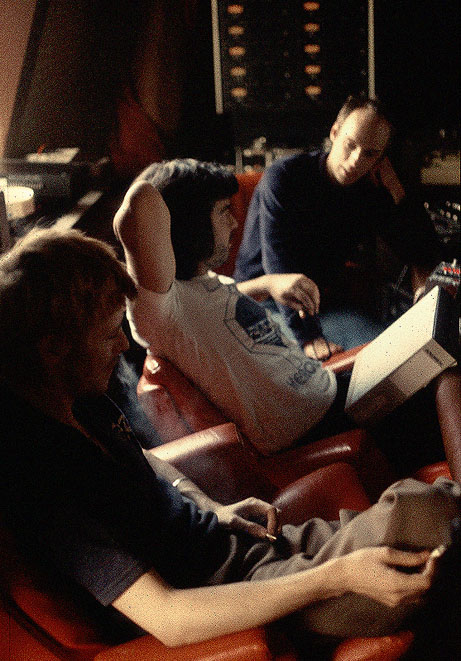
Ricky Gardiner’s photo of the studio desk Chateau D’Herouville including Bowie Eno and Visconti/ Low sessions
Q/A by Simon Goddard of Q magazine
Q BOWIE/IGGY BERLIN YEARS Q&A
RICKY GARDINER
1. Having worked with both, what do you see as the main differences between David and Iggy, in terms of personality and also in terms of what they’re like to work with/how they create their music?
When eating, Iggy will be interested in the food and give it his full attention, David will know it is in front of him, but will probably be thinking of something else.
When working, Iggy will experience it , David will perform it.
Iggy will use references if he must, David of necessity.
Iggy expresses himself, David expresses his time.
Iggy imagines, David observes.
Both are talented and both work hard.
2. As somebody who worked closely with both, what do you think David and Iggy had in common that formulated their friendship; what was the mutual attraction from your perspective?
Whilst they share certain qualities of energy, the transformation process conditioning the energies in each one results in quite different forces being expressed. Thus, that which unites them is both mutual and complimentary.
It might be said that if they occupied the same body, a most interesting parade of works may appear.
However, since they are not so combined , they each strive to discover the secret of the other.
3. Berlin in 1976 is always painted out to be this strange mix of East European austerity (The Wall) and Western decadence – the nightclubs, the drag bars and the fact the city was supposedly the heroin capital of Europe at the time. What are your memories of the city – the culture, the nightlife and the looming shadow of the wall itself. Any specific anecdotes that sum up your experience of Berlin?
Isn’t it a most interesting thing that those who go and look for heroin, seem to find it?
( I have spent quite a lot of time in Berlin, and have never found it )
My experience of Berlin was of a city culturally and politically confused by the traumatic shattering of the German personality as a result of WW2.
To expect normative behaviour from the inhabitants of that stricken island edifice, would have been unrealistic.
None the less, the human spirit will not be stifled indefinitely, as we have seen , and so I presume a lot of healing will have taken place since the political rearrangement.
Today we talk of Berlin as one place. Then it was two. In West Berlin there was no East European austerity, Yes there was Western decadence but why look for that? There was and is much beauty, fine architecture, parklands and lakes. The so called decadence was very much a minority and only of interest to some adolescents, post adolescents, those with indulgent appetites and deviants. Unfortunately, most cities suffer this illusionary blight , but it is temporary, and once society dispenses with fraudulent quackery masquerading as glamorous living, this destructive virus will be brought under control.
4. David had gone to Europe to escape LA because he was in a bad state; his cocaine abuse is well documented and he was still obsessed with numerology and occult matters. When you first met David and began recording Low, was there any evidence of mental imbalance/strange obsessions?
David told me that L.A. was difficult. I assume from this that he was impressionable and perhaps susceptible to the intake of that which is fashionable yet poisonous.
It must be remembered that the life of an artist is complex.
That which confers the sensitivity which, when externalised, becomes art , may also subtly erode the boundaries between useful energies and destructive forces. When negatively engaged, the destructive forces can hold sway, leading to the personality being manipulated to the detriment of healthful productivity.
However, those same energies, when rightly channelled can, and sometimes do, lead to inspired works.
Occult matters must be respected and should never be approached when intoxicated.
I never saw any evidence of mental imbalance but if there was , I would blame the toxins first, of which I saw no evidence.
5. How did you handle Brian Eno’s ‘Oblique Strategies’ method of working; apparently Carlos Alomar found it frustrating at times and even David has later admitted that he and Eno subjected the band to “art pranks” for their own amusement?
I must say, I rather liked Brian and found him interesting to talk to.
I think oblique strategies must have been reserved for side two of the album, because when recording with the band and during subsequent overdubs, it was just like recording of any other album.
I know nothing of art pranks although I know David can be playful.
6. Some famous incidents at the Chateau when making Low – that David and Tony Visconti came down with food poisoning, and that a French journalist had infiltrated the Chateau posing as a member of staff. What do you remember about these incidents, and the making of Low in general?
I missed the food poisoning incident. Tony (Visconti ) told me all about it. Complaint was made and things improved. I enjoyed the food and the conversation which was very civilised. I thought Iggy did rather well sticking to his macrobiotic rice !
As to the French journalist, I would not have noticed nor would I have given two hoots. This was not the only time there were rumours about such matters, Perhaps it was a management ruse to encourage THE BOYS to keep SCHTUM . Perhaps not?
7. Was Low a team effort – were Dennis, Carlos and yourself all contributing or was it more a case of following David, Brian and Tony’s lead?
David was MC during run throughs which were faithfully recorded by Tony. I remember Tony was not particularly pleased with the desk but it seemed to be sorted out eventually.
8. According to biographers, David’s estranged wife, Angie, paid a visit to the studio with her new boyfriend and caused considerable friction. Were you there at the time?
I was there and I already knew Angela and her ‘new boyfriend’.
Certainly it was a difficult time for the pair of them, but I do not recall the new boyfriend being present. I felt sorry for Angie. She was bright and resourceful and I believe a great help to David, but it was not to last.
9. You played on The Idiot tour, where David attempted a degree of anonymity by playing keyboards in the background. What was it like being around such a huge star on stage who was deliberately shunning the limelight. And any memories stick out from that tour?
David playing keyboards on the ‘Idiot’ tour gave Iggy a certain challenge to keep the eyes of the audience upon himself and not upon his more famous keyboard player, David’s challenge was to remain uncompetitive.
I think they succeeded to a degree not fully expected by some.
Yes, David was a big star but, you know, we were just a bunch of musicians playing together and with Hunt and Tony (Sales) in the band, you could NOT take things like that seriously. Those were great boys and they were good fun.
10. Lust For Life was a far more conventional “rock” record than The Idiot. Iggy was now on a health kick, started weight lifting and had a renewed and genuine “lust for life”. What was it like witnessing that transition, from drug casualty to reborn/new Iggy?
When I met Iggy he had already made the transition. He was fit , healthy and enthusiastic. During all my time recording Low, Lust for Life and throughout the ‘Idiot’ tour. I never saw Iggy the worse for wear. Not once. Maybe I am just lucky!
11. How does it feel being part of albums which literally changed the face of music for the next 30 years thereafter, from Joy Division to Radiohead?
People tell me these albums are important but when you are making them you can never foretell.
Virginia Scott, who was also present during the recording of ‘Lust for Life’ insisted that the ‘Passenger’ would be a successful song.
However, as we know, the record company initially turned down ‘Low’ and ‘Lust for Life’ took seven years to start moving.
Am I proud of my involvement?
Of course.
The answers to these question are the copyright of Ricky Gardiner Songs
This message was typed by Virasco from Ricky Gardiner’s notes
ricky gardiner <ricky.gardiner@virgin.net> wrote:
Dear Simon,
Thank you for your e mail and your interview request.
I would be delighted to answer any questions you may have.
Please submit them via e mail and I shall reply,and we will take it from there.
Cheers,
Ricky
from Ricky Gardiner’s notes. This message was typed by Virasco
—– Original Message —–
From: Simon Goddard
To: ricky.gardiner@virgin.net
Sent: Wednesday, November 29, 2006 12:16 PM
Subject: Q Mag Request: Ricky Gardiner
FAO RICKY GARDINER
RE: Q MAGAZINE
Early 2007 Q Magazine (the UK’s leading music monthly) will be celebrating the 30th anniversary of David Bowie’s albums Low and Heroes. Three decades on, these albums continue to inspire new music and remain among the most frequently cited and most influential records of the last 50 years.
In commemorating this anniversary, Q have asked me to write a feature on the making of Low and Heroes. It would be fantastic to speak to Ricky Gardiner about his work on those records (as well as Iggy Pop’s) and to place them in a fresh perspective with new quotes.
If Ricky is available for telephone interview that would be greatly appreciated.
My contact details are below. My copy deadline is January 4 so ideally if Ricky is available the interview would have to happen prior to Christmas (next week?).
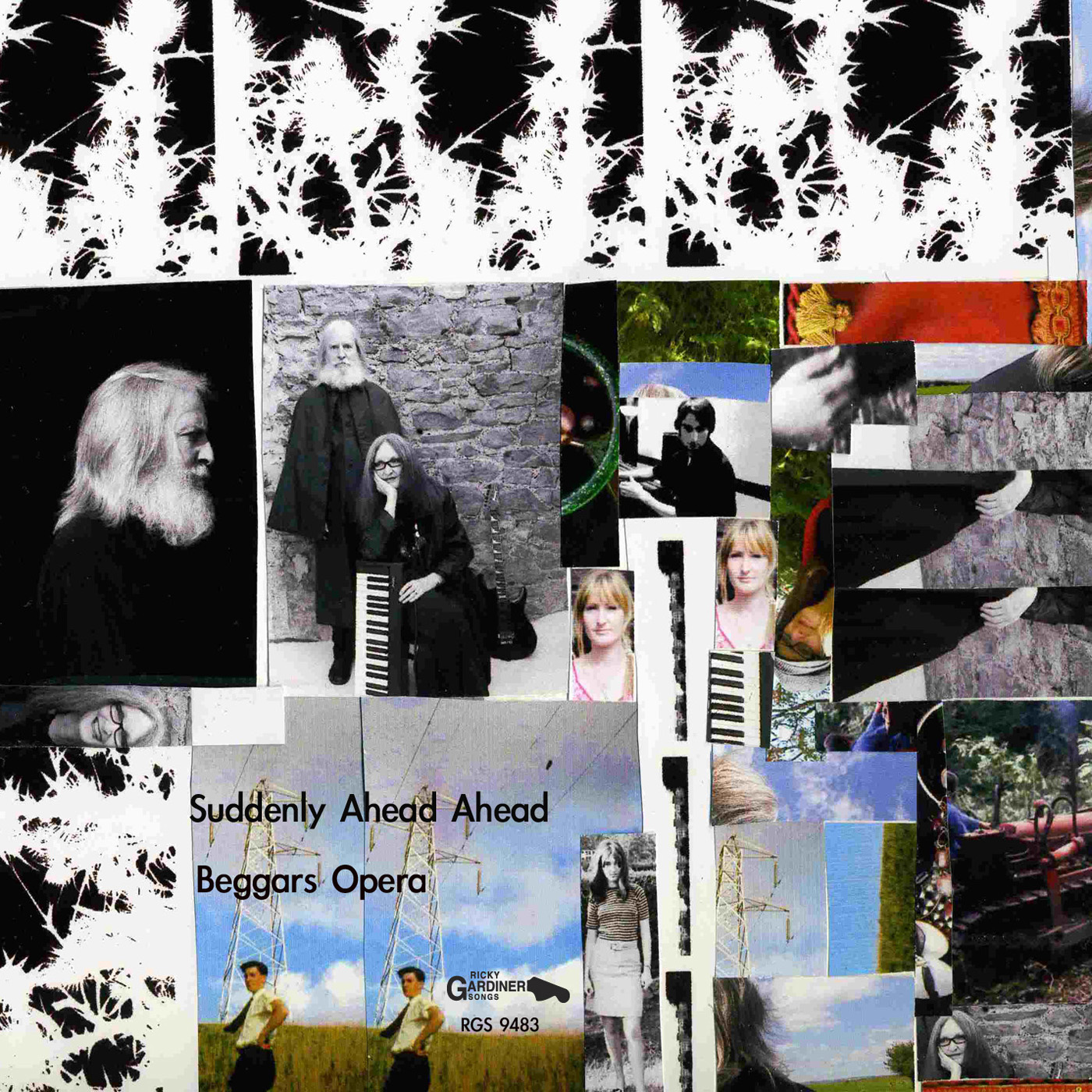
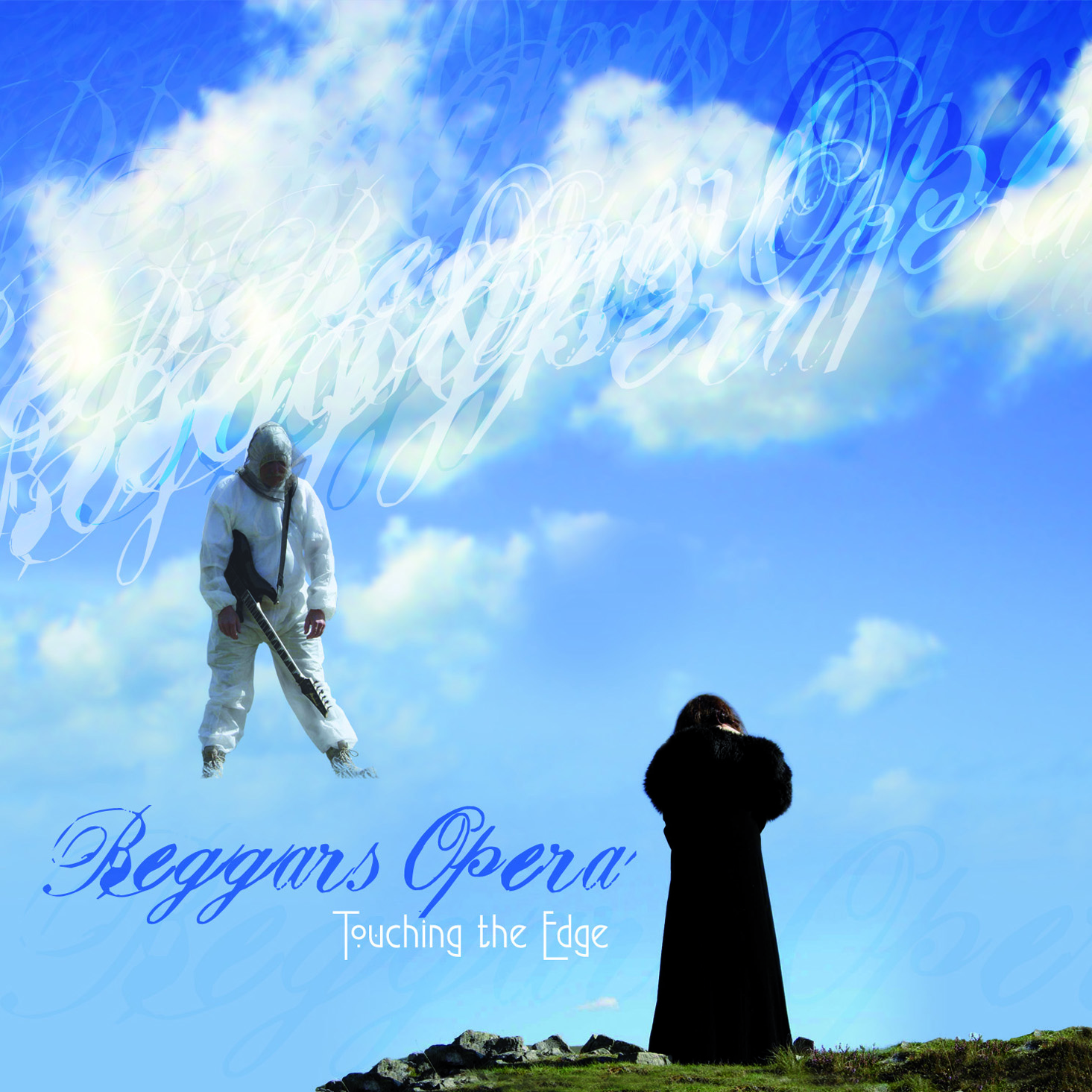
Welcome to a rough guide to Beggars Opera the 9th and final line-up (see below) and the creative process involved in the production of the 10 Beggars Opera Progressive Rock albums, released by RGS (Ricky Gardiner Songs )
In 1996, Ricky Gardiner fell ill with SHINGLES and then developed an extremely rare condition known as Electrical Sensitivity. As a result he was unable to do live performance or work on any of the extended symphonic guitar pieces he was creating at the time. His studio had to be totally remapped and was in fact spilt in two working units. One for Ricky and one for Virginia.
Song structures, back tracks and lyrics were created by Virginia Scott and then she recorded vocals and keyboards in her studio . These tracks were then imported into Ricky’s studio and guitars were added. Tom Gardiner drummer sent tracks remotely from his pod and then Ricky produced a mix.
Since Ricky passed away in 2022 it has been very difficult to listen to these tracks, but now we are enjoying Ricky’s incredibly melodically beautiful guitar playing again.
Beggars Opera line-ups from 1970- 2022
1/ Ricky Gardiner, Alan Park, Martin Griffiths, Marshall Erskine & Ray Wilson
2/ Ricky Gardiner, Alan Park, Martin Griffiths, Gordon Sellar, Virginia Scott & Ray Wilson
3/ Ricky Gardiner, Alan Park, Pete Scott, Gordon Sellar & Ray Wilson
4/ Ricky Gardiner, Alan Park, Linnie Patterson, Gordon Sellar & Ray Wilson
5/ Ricky Gardiner, Alan Park, Linnie Patterson, Gordon Sellar & Colin Fairley
6/ Ricky Gardiner, Virginia Scott, Pete Scott & Mike Travis
7/ Ricky Gardiner, Virginia Scott, Pete Scott & Clem Cattini
8/ Alan Park, Gordon Sellar, Linnie Paterson, John Hollywood & Colin Pattenden
Another of Ricky Gardiner’s multi layered melodic guitar compositions from the Beggars Opera’s Get Your Dog off Me Vertigo
There’s an interesting story attached to this track. After Beggars Opera disbanded Ricky Gardiner was a producer for British Lion Music, which was part of the famed British Lion Films, who were at that time working on The Wicker Man starring Christopher Lee. Requiem was scheduled to be include in footage of a graveside scene, but never made it into the film. How spooky is that ! It was very atmospheric watching this take in British Lion’s plush viewing room in Soho at the time !
Beat Club Bremen youtube has uploaded the 1971 Beggars Opera sessions of their legendary track Time Machine
Ricky Gardiner/ guitar, Alan Park / Hammond organ, Virginia Scott/ Mellotron, Martin Griffiths / Vocals, Gordon Sellar/ Bass and Raymond Wilson/ drums, a glorious vintage performance !
 A recently discovered set of answers to a Q and A from a Spanish music journalist , which Ricky Gardiner typed out, that give an interesting insight into the Low David Bowie session at the Chateau d'Herouville . Go intuit the questions !
 Ricky also took this enigmatic kodachrome image (see below ) of the Brain Eno at the Chateau d'Herouville during these sessions

ANSWERS FOR SPAIN

1: DAVID PHONED ME AND ASKED IF I WOULD GO TO THE CHATEAU AND PUT ON SOME LEAD GUITAR. I AGREED.

2: THE IDIOT TOUR WAS GREAT FOR ME, AFTER BEGGARS OPERA, BECAUSE IT WAS ALL FIVE STAR—— MARVELLOUS.

3: I SEEMED TO FIT IN VERY WELL—- TALKING TO CARLOS, GEORGE MURRAY AND BRIAN ENO WAS A LOT OF FUN.

4: I DID PRETTY MUCH AS I WISHED. DAVID SEEMED TO BE TAKEN WITH THE TREMOLO ARM.

5: BREAKING GLASS. I LIKE YOUR DESCRIPTION ‘ LIKE MECHANICAL FUNK’.

6:’WHAT IN THE WORLD’. YOU SAY IT HAD A POWERFUL RHYTHM. IT SHOULD BE REMEMBERED THAT TONY VISCONTI, BEING A BASS PLAYER, TOOK DRUMMING VERY SERIOUSLY.

7: ‘SOUND AND VISION’. THIS WAS VERY MEMORABLE BECAUSE MARY SANG SO BEAUTIFULLY ON IT.

8: ‘ALWAYS CRASHING IN THE SAME CAR’. THIS WAS THE FIRST OF THE SOLOS I OVERDUBBED. I BELIEVE BRIAN WAS THERE. THEY, DAVID, BRIAN AND TONY, SEEMED TO LIKE IT.

9: ‘BE MY WIFE’. I LIKE THE PIANO AFTER THE INTRO. IT STRIKES ME THAT ROY WAS ON SONG THERE.

10: ‘A NEW CAREER IN A NEW TOWN’. THE THING I TAKE FROM THIS IS GEORGE MURRAY’S RIFF ON THE PRECISION BASS AT TWO MINUTES AND TWENTY THREE SECONDS.

11: CARLOS AND I GOT ON VERY WELL. OUR COLLABORATION WAS VERBAL.

12: THE ‘LUST FOR LIFE’ ALBUM JUST HAPPENED. I DO NOT REMEMBER ANYONE DIRECTING AS SUCH.
the honky chateauThe studio desk Chateau D’HerouvilleMary Hopkin/ Jess Tony Visconti and Brian EnoDenis Davies Carlos AlomarTony and Morgan Visconti Ricky Gardiner Ufa Berlin 1977
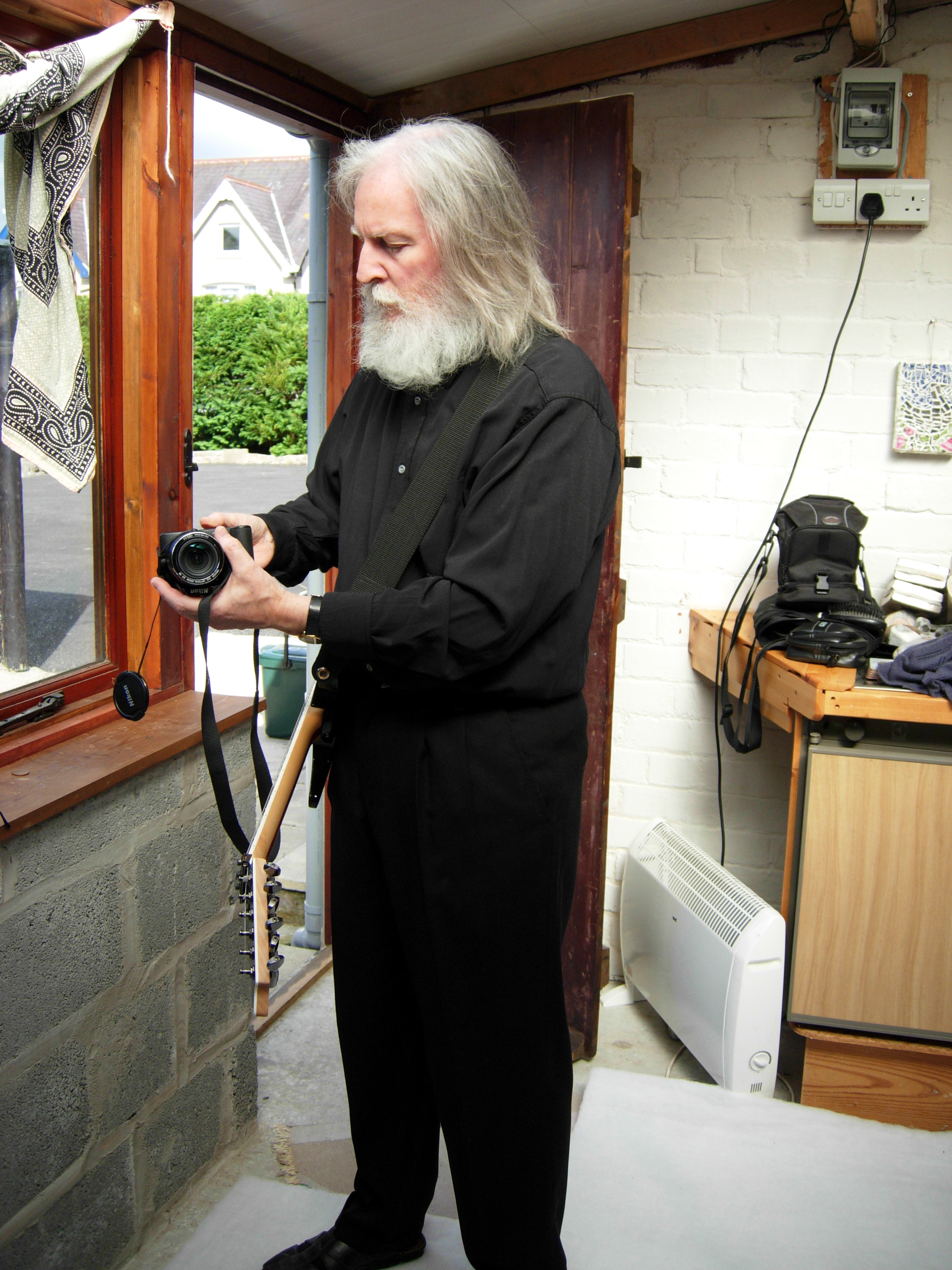
One of the last things Ricky Gardiner worked on before he fell ill was his solo album Songs for the Electric.. This is Ricky preparing for a photo shoot for the album cover. The exclusive download from the Beggars Opera website contains 11 tracks of chilled out guitar songs from the master of melody himself, with Virginia Scott on Keyboards.
Singer Pete Scott joined Beggars Opera in 1973 He was a classically trained and sang blues, having previously been with Savoy Brown on a tour of USA. He has an amazing improvisational ability. This is a rare image of the band at the time, taken at the Legendary Marquee club in London of l/ r Ricky Gardiner, Pete Scott, Raymond Wilson and Gordon Sellar. Pete Scott was to return to Beggars Opera in 1975 and sang on Beggars Opera releases Sagittary and Beggars Can’t be Choosers for Jupiter Records Germany.
Thanks to Russel Leadbetter for his write up in the Herald recently about Beggars Opera in 70’s Glasgow.
“BACK in the November of 1969, the discerning music fan in Glasgow had lots of intriguing concerts to choose from.
David Bowie, Deep Purple, and Fat Mattress – the latter featuring Noel Redding, former bassist with the Jimi Hendrix Experience – all played the Electric Garden on Sauchiehall Street. Such shows were billed as ‘Electric Garden goes Underground every Monday night’.
Jon Hiseman’s Colosseum were at the Maryland Club, in Scott Street, across the road from the Glasgow School of Art. And, down at Burns Howff on West Regent Street, a progressive rock band called Beggars Opera was about to start a residency.
The quintet took over the slot from the popular rock band Stone the Crows (who themselves included Maggie Bell, Jimmy Dewar, and Les Harvey), and were an immediate success. At one point in 1970, a city newspaper reported that there was an hour-long queue outside the venue on a Saturday morning, prior to a Beggars Opera appearance.”
For the full article click on this link: BACK in the November of 1969, the discerning music fan in Glasgow had lots of intriguing concerts to choose from.